
How Do You Know If You Have Mold in Your Air Ducts?
Your air ducts’ job is to circulate comfortable, conditioned air throughout your home. The bad news is that they can occasionally circulate something unwanted: musty odors and mold-related particles.
Mold growth in HVAC systems occurs when moisture, dust, and poor airflow create ideal conditions for it to thrive. And because most ductwork is hidden behind walls and in ceilings, you probably won’t realize there’s a mold problem until the warning signs become impossible to ignore.
So, how do you know if there’s mold in your air ducts? Here’s what to look for, what causes it, and how to deal with the issue without making things worse.
Signs of Mold in Air Ducts You Shouldn’t Ignore
The most common signs of mold in air ducts include:
- Persistent musty odors when your HVAC system runs
- Visible growth around vents
- Excessive indoor humidity
These warning signs don’t automatically mean there’s mold in your ductwork, but they do warrant further inspection, especially if you’ve experienced or suspect water damage.
Musty Smell from Air Vents
Does your home smell like a wet dog every time the AC kicks on?
A persistent musty smell from your vents can indicate moisture and mold growth somewhere in your HVAC system. If the odor gets stronger when the system runs, check for moisture around vents, cooling coils, and accessible ductwork.
Pro Tip: Check whether the smell is coming from one vent or several. A localized odor may help pinpoint a nearby moisture problem. Odors throughout the house may suggest an issue closer to the unit itself.
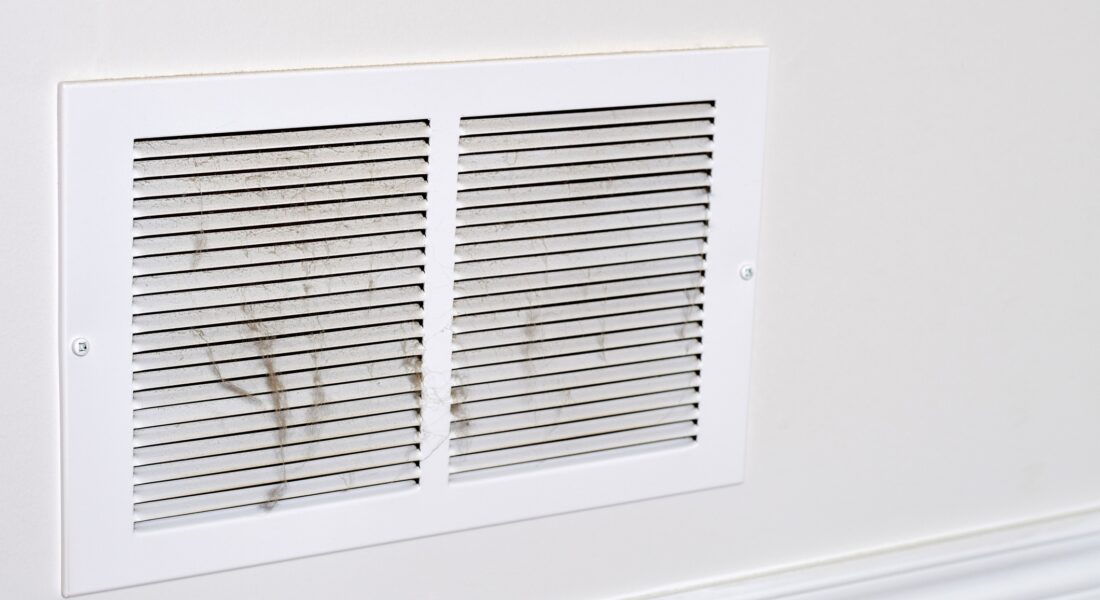
Visible Mold Around Vent Covers
Dark, greenish, or fuzzy patches around vent covers deserve attention, but not every dark spot is mold. Dust, dirt, and ordinary discoloration can look very similar to mold. For example, mildew is often mistaken for mold.
Also, visible growth around a register or grille doesn’t prove mold is growing deeper inside the ducts. A professional inspection can help determine where the contamination is coming from.
Increased Allergy or Respiratory Symptoms
Mold can pose health risks. Sneezing, coughing, itchy eyes, or nasal congestion that worsens indoors may raise suspicions. But it’s important to note that dust mites, pollen, and other indoor allergens can cause similar reactions.
Track allergy patterns before immediately blaming your ductwork.
Excess Humidity in Your Home
Mold loves moisture. Your HVAC system? Not so much.
Condensation on vents, damp insulation, and persistently humid rooms can create conditions that encourage mold growth. The EPA recommends keeping indoor humidity below 60%, ideally between 30% and 50%.
Why Mold Grows Inside Air Ducts
Mold doesn’t magically appear out of thin air. Mold spores are always present indoors, but lingering moisture allows those spores to grow on suitable surfaces.
Condensation and Moisture Buildup
When humid air meets a cold surface, condensation forms. Poorly insulated ducts, cooling coils, and draining pans that aren’t draining can become problem areas for moisture.
Pro Tip: If you notice water around your indoor HVAC unit, check for a clogged condensate drain or overflowing drip pan. You have to address the water source before attempting to tackle mold.
Poor Ventilation and Airflow
Restricted airflow can create uneven temperatures and moisture problems. Blocked returns, closed registers, or malfunctioning equipment may make matters worse, especially in humid environments.
Dirty Air Filters Trapping Debris
Clogged filters restrict airflow and cause dust to accumulate elsewhere in the system. If sufficient moisture is present, that dust contains enough organic material for mold to grow.
Pro Tip: Make sure you replace air filters according to manufacturer recommendations and filter type. Inspect them more frequently during periods of heavy heat and AC use.
Mold in HVAC System — Health Risks to Know
Everyone reacts differently to mold exposure. Some people experience noticeable irritation, while others have mild symptoms or none at all.
Common Symptoms of Mold Exposure
Potential reactions include:
- Sneezing and nasal congestion
- Itchy, watery eyes
- Coughing or throat irritation
- Wheezing or aggravated asthma symptoms
- Skin irritation in sensitive individuals
The CDC notes that mold exposure can also cause respiratory flare-ups and trigger asthma attacks in susceptible people. However, these symptoms alone can’t establish that mold is present or identify its source.
Improve Drainage
Getting rid of moisture is one of the best ways to reduce mold growth. Keep condensate drains clear, repair leaks quickly, and make sure water drains away from HVAC equipment rather than pooling around it.
After flooding or a significant leak, check nearby ductwork and insulation for trapped moisture.
Who’s Most at Risk (Kids, Elderly, Asthma/Allergy Sufferers)
People with asthma, allergies, respiratory conditions, or weak immune systems are particularly vulnerable to mold-related health risks. Children and the elderly also deserve extra consideration, especially if they have underlying respiratory conditions.
If symptoms persist or worsen, talk to a healthcare professional before it becomes a more serious health issue.
How to Confirm Mold in Your Air Ducts
Before paying for an extensive duct cleaning, make sure you actually have a mold problem.
Start with these four practical steps:
- Inspect accessible vents: Look for suspicious growth, moisture, or discoloration.
- Check the HVAC equipment. Examine accessible condensate pans, filters, and surrounding surfaces.
- Look for signs of water damage. Investigate ceiling stains, damp insulation, and previous leaks.
- Schedule a professional Inspection. Qualified professionals can examine internal duct surfaces and determine whether further evaluation is necessary.
Don’t rely on a photograph or home mold test kit alone. Identifying mold growth and its source requires appropriate inspection, and sampling isn’t always necessary.
How to Re
If you’re wondering how to remove mold from air ducts without spreading contamination, the answer depends on the affected materials and how serious the problem is.
Don’t blast bleach, Febreze, or household disinfectants directly into ductwork. These products won’t address the underlying problem. They may just introduce more airborne irritants.
Instead, have a qualified professional:
- Identify and correct the moisture source.
- Inspect the HVAC system to determine the extent of contamination.
- Clean salvageable, appropriate nonporous components using suitable methods.
- Replace contaminated porous materials, such as moldy fiberglass duct liner, when necessary.
- Verify that moisture problems have been resolved before returning the system to normal operation.
Not every suspicious vent requires an air duct overhaul. In fact, unnecessary cleanings can waste a lot of money without doing anything to improve indoor air quality.
When water damage or suspected mold threatens your home’s air quality, 24 Hour Flood Pros is available around the clock to help identify moisture problems, address water damage, and provide professional mold remediation.
Because the only thing your air ducts should be spreading is comfortable air.


