
When a property experiences water damage, what happens in the hours and days that follow determines whether restoration is successful or costly problems linger. Structural drying and dehumidification aren’t guesswork — they’re science-backed processes designed to return buildings to safe, dry conditions as efficiently as possible.
Understanding Structural Drying
Structural drying is the controlled removal of moisture from building materials such as:
- Drywall
- Wood Framing
- Insulation
- Subfloors
After a flood or leak, water penetrates porous materials, where it can remain trapped long after visible water is gone.
How It’s Done
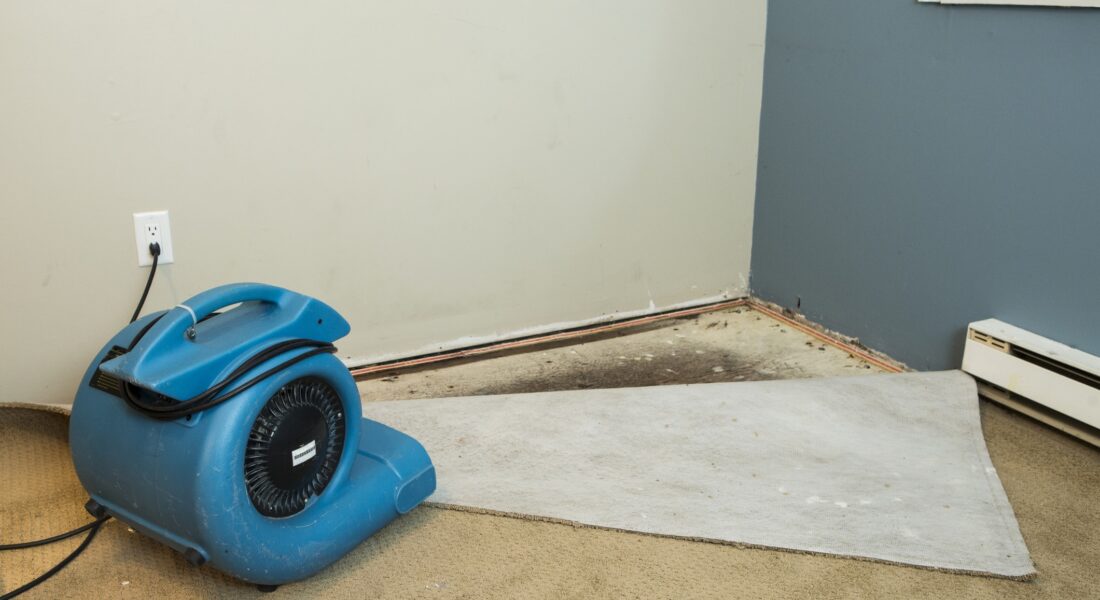
Professionals use high-velocity air movers to create airflow across wet surfaces. This airflow accelerates evaporation, turning liquid water into vapor that can be removed from the environment.
- The key is balance — too little airflow slows drying, while too much can spread moisture to unaffected areas.
Pro Tip: Effective structural drying isn’t about speed alone — it’s about controlling airflow patterns to target wet materials without causing secondary damage.
Before structural drying comes water extraction. Learn more here: Emergency Water Extraction: When DIY Isn’t Enough
The Role of Dehumidification

As moisture evaporates, it increases the humidity in the air. If that humid air isn’t removed, evaporation slows dramatically.
That’s where dehumidification comes in.
Dehumidifiers pull moisture-laden air across cold coils or desiccant materials, extracting water vapor and releasing drier air back into the space. This lowers the relative humidity, allowing more moisture to evaporate from structural materials.
Different situations require different equipment:
- Refrigerant dehumidifiers work best in warm, humid environments.
- Desiccant dehumidifiers excel in cooler conditions or dense materials like concrete.
Pro Tip: Matching the right dehumidifier to the environment can cut drying time significantly and reduce energy costs.
Interested in the difference between mitigation and restoration? We’ve got you covered: Mitigation vs. Restoration 2025: What’s the Difference?
Moisture Measurement and Monitoring
Science-driven drying relies on data, not assumptions. Restoration technicians use moisture meters, hygrometers, and thermal imaging cameras to measure moisture levels in materials and the surrounding air.
These readings establish a baseline, guide equipment placement, and confirm when materials have returned to normal moisture content.
- Continuous monitoring ensures drying stays on track and prevents over-drying, which can cause warping or cracking.
Pro Tip: Documented moisture readings protect property owners by proving that drying was thorough and standards-compliant.
Consider installing smart home detectors for ultimate prevention: How Smart Home Devices Are Helping Prevent Fire and Water Damage
Why Proper Drying Prevents Long-Term Damage

Incomplete drying can lead to mold growth, structural weakening, unpleasant odors, and ongoing indoor air quality issues. Mold can begin developing within 24–48 hours in damp conditions, making fast, scientific drying essential.
- By controlling evaporation, humidity, temperature, and airflow, professional structural drying stops mold damage at the molecular level — before it becomes visible or costly.
Pro Tip: The fastest water removal isn’t always the safest — controlled drying prevents hidden moisture problems down the line.
Learn the real cost of delaying water damage here: The Real Cost of Delaying Water Damage Restoration
Drying It Right the First Time
Structural drying and dehumidification are precise, science-based processes that protect both buildings and the people inside them. At 24 Hour Flood Pros, trained professionals use proven drying principles, advanced equipment, and real-time monitoring to restore properties thoroughly and efficiently — day or night!


