
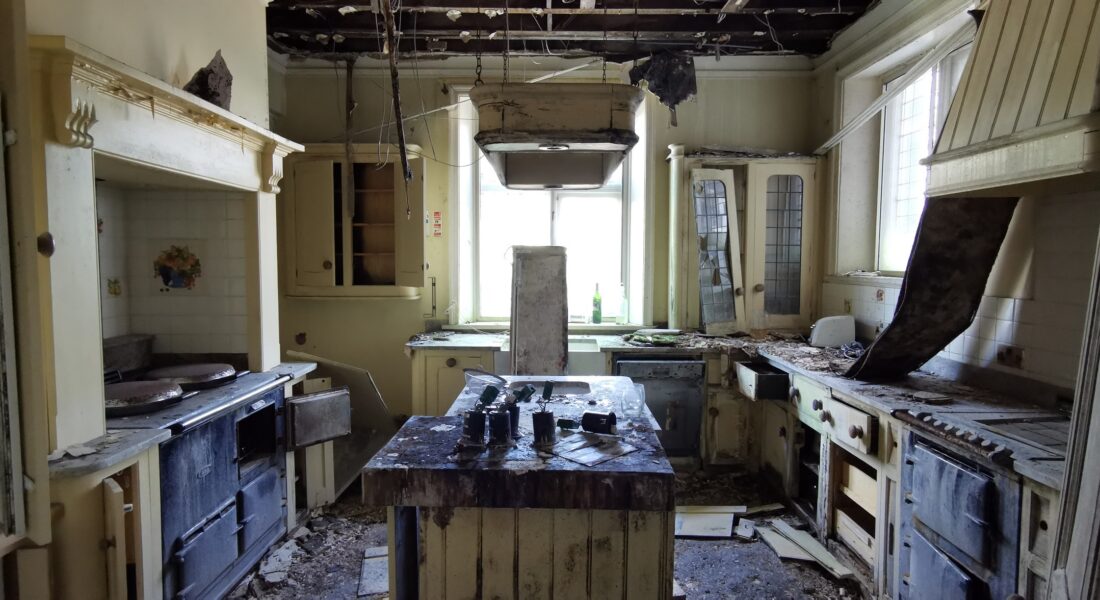
Fire doesn’t just leave visible destruction in its wake — it can also quietly compromise the very framework of a building. Understanding how fire affects structural integrity is essential for property owners, especially when determining:
- Safety
- Repair Needs
- Long-term Stability
Here’s what you need to know about the structural impact of fire damage.
The Immediate Effects of Heat on Building Materials

Extreme heat damage from a fire can deform common construction materials in minutes. Even if a structure appears intact, the internal integrity of key components may be significantly degraded.
- Wood burns, chars, and loses load-bearing capacity.
- Steel expands and softens at high temperatures, potentially bending or buckling.
- Concrete can crack or spall (break apart), exposing internal reinforcements.
- Drywall disintegrates quickly, compromising wall assemblies.
These material changes weaken floors, walls, and ceilings, making the structure extremely hazardous for occupancy.
Pro Tip: Don’t rely on visual inspections alone — hidden heat damage often requires professional structural assessments using specialized tools.
Learn the most common residential fire hazards here: The Most Common Fire Hazards in Modern Homes (and How to Prevent Them)
Structural Shifts and Hidden Weaknesses
Beyond obvious damage to materials, fires can also cause subtle structural shifts that may go undetected. As materials expand and contract under intense heat, the building’s framework may become misaligned.
Common hidden issues include:
- Warped Support Beams
- Compromised Load Distribution
- Cracked Foundations or Load-bearing Walls
- Loosened Joints and Fasteners
These issues can worsen if not addressed promptly, leading to partial or total structural failure.
Pro Tip: Early post-fire inspections can prevent minor structural shifts from escalating into major reconstruction costs.
Not sure what to do after a house fire? We’ve got you covered: What to Do After Enduring a House Fire
How Water Damage Compounds Structural Risk
Ironically, the water used to put out a fire often causes additional damage. Excess moisture can seep into structural components, accelerating deterioration.
- Wood framing absorbs water, leading to swelling, rot, and mold growth.
- Metal components become more susceptible to corrosion.
- Insulation and drywall retain moisture, weakening structural systems.
This combination of fire and water damage creates a complex restoration challenge that requires a comprehensive approach.
Pro Tip: Fast water extraction and drying are just as critical as fire cleanup to preserve structural integrity.
Learn more about structural drying here: The Science Behind Structural Drying and Dehumidification
Smoke and Soot: The Silent Degraders

Smoke and soot may seem superficial, but they can have long-term effects on building materials. Acidic residues left behind can corrode and weaken structural components over time.
- Metal fixtures and fasteners may rust.
- HVAC systems can spread contaminants throughout the structure.
- Porous materials absorb soot, leading to persistent damage.
If left untreated, soot continues to damage not only the structure but also items not directly affected by flames long after the fire is extinguished.
Pro Tip: Professional cleaning and deodorization are essential to remove corrosive residues and prevent ongoing structural deterioration.
Find more tips on dealing with smoke and soot here: How to Clean Smoke and Soot Damage from Wildfires Safely
Assessing and Restoring Structural Integrity
Restoring fire-damaged property requires more than just cosmetic repairs — it demands a thorough evaluation of the building’s structural health.
A professional restoration process typically includes:
- Structural Engineering Assessments
- Removal of Compromised Materials
- Reinforcement or Replacement of Load-bearing Components
- Moisture Mitigation and Mold Prevention
- Air Quality and Contamination Cleanup
Addressing all layers of damage ensures the building is safe, stable, and compliant with local codes.
Pro Tip: Partnering with a full-service restoration company ensures that both visible and hidden structural issues are properly resolved.
Restoration services also help you deal with insurance claims. Learn more here: How Emergency Restoration Companies Work With Insurance Claims
Rebuilding Stronger with 24 Hour Flood Pros
Fire damage is often overwhelming, but with help from experienced professionals, your property can be restored to its former glory. Structural integrity is not just about what you see — it’s about ensuring every component of your building is safe and sound.
If your home or business has experienced fire damage, don’t take risks with safety. Contact 24 Hour Flood Pros today for expert fire damage restoration. Our team is available around the clock to assess damage, stabilize your structure, and guide you through the recovery process with confidence!


